
Tangueria
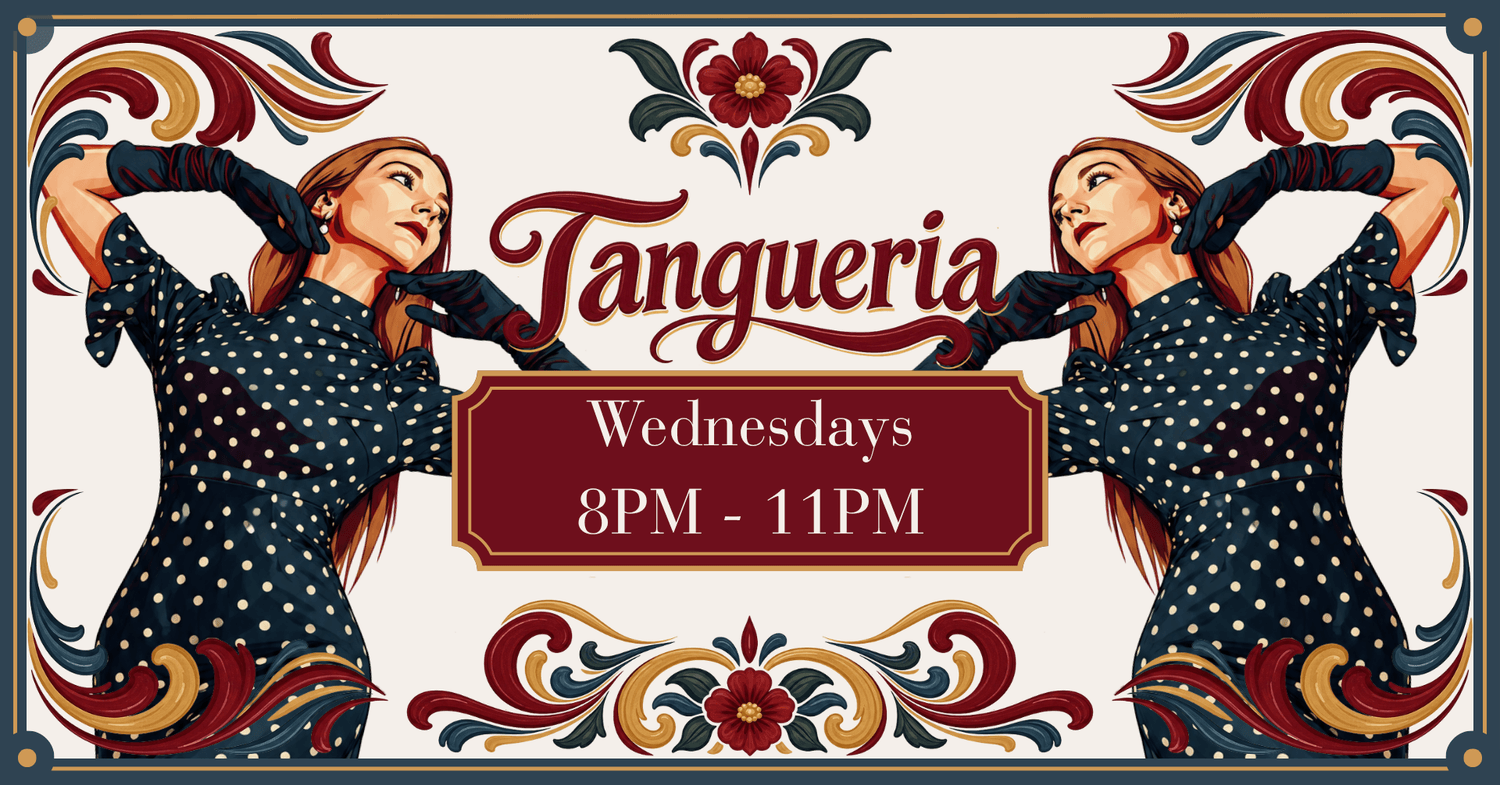
Tangueria is more than a milonga — it’s a place to gather, dance, listen to tango and share the joy of being together. A space for music, connection and community, where the magic of tango brings people together, both on and off the dance floor. Come as you are, stay a while, and feel at home.
Book Your PlaceWhat is a milonga?
A social dance event where people gather to dance Argentine tango, enjoy the music, and connect with others in the tango community.
New to Milongas? Here is what you need to know before you come to your first Milonga.
Read the Milonga GuideBook your place
Choose your date below and book securely online.
Your first milonga
1.What is a milonga?
A milonga is a social event where people gather to dance Argentine tango. It is a place where music, movement and human connection come together, bringing dancers of different backgrounds and levels into a shared experience.
The tradition originates in the Río de la Plata region, particularly Buenos Aires and Montevideo, where tango culture flourished in the late 19th and early 20th centuries. Over generations, milongas became much more than dance events: they became meeting places, social spaces and an essential part of the tango community.
At Tangueria, we embrace this tradition while making room for our own community to grow. We believe a milonga should be more than a dance floor — it should be a place to meet, share, discover and feel welcome, whether you come to dance every tanda or simply to enjoy the atmosphere.
2.The music: tandas & cortinas
The music is the heart of every traditional milonga. The evening usually features three musical styles:
- Tango — expressive, elegant and rich in musical detail.
- Vals — flowing and circular, danced to the rhythm of a waltz.
- Milonga — lively, rhythmic and playful, with its own distinctive character.
Music is traditionally organised into sets called tandas. A tanda usually contains three or four songs with a similar style, often by the same orchestra, allowing dancers to settle into the music and develop a shared experience with their partner.
Between tandas, the DJ plays a short piece of non-tango music called a cortina (meaning “curtain”). This signals the end of one tanda and the beginning of a pause: couples leave the floor, dancers may change partners, and everyone has a moment to socialise before the next set begins.
In traditional tango culture, accepting an invitation generally means dancing the entire tanda together. This creates a natural rhythm to the evening, with time for dancing, conversation and connection.
3.The art of the invitation: mirada & cabeceo
One of the most distinctive traditions of a milonga is the cabeceo — a subtle, non-verbal way of inviting someone to dance.
- Mirada is the eye contact that opens the possibility of an invitation. A brief, mutual gaze can communicate interest without any pressure.
- Cabeceo is the small nod of the head used to offer or accept a dance. If the invitation is welcomed, the other person responds with a nod; if not, they can simply look away.
This tradition allows both people to choose freely and comfortably, without the awkwardness of a public refusal. It is not a game to be mastered, but a way of communicating with courtesy and consideration.
An invitation should always be mutual. No one is obliged to accept a dance, and a declined invitation should be received gracefully. At a milonga, the freedom to choose is just as important as the joy of dancing.
4.The ronda: sharing the dance floor
A milonga dance floor has its own natural flow, known as the ronda. Couples generally travel counterclockwise around the floor, following an invisible line of dance and maintaining their place within the flow of other dancers.
The aim is not to cover the most ground or perform the most impressive moves. It is to create a comfortable, harmonious experience for everyone sharing the space.
A few simple principles keep the ronda flowing:
- Follow the line of dance. Move counterclockwise and avoid cutting across the floor.
- Maintain your distance. Leave enough space between couples to dance safely and comfortably.
- Respect the flow. Avoid overtaking, sudden stops or unnecessary gaps that disrupt the ronda.
- Keep movements appropriate. Choose steps that fit the space available and never put other dancers at risk.
- Enter with care. Wait for a suitable opening and make eye contact with approaching dancers before joining the ronda.
A good dancer is not only aware of their partner, but also of everyone around them. The best ronda is one in which the whole floor moves together.
5.Milonga etiquette: do’s & don’ts
Milonga etiquette is built on a simple principle: respect for your partner, the music and the community. Traditions may vary between venues, but these courtesies help create an enjoyable environment for everyone.
DoRespect everyone’s choices.
Accept invitations freely, and accept a “no” — whether expressed verbally or through the cabeceo — with a smile and without pressure.
Don’tTeach or criticise on the dance floor.
A milonga is a social dance, not a class. Unsolicited corrections, criticism and comments about a partner’s dancing can spoil the experience.
DoDance with consideration.
Adapt your movements to the available space, protect your partner’s comfort and help maintain a safe, flowing ronda.
Don’tImpose unwanted contact or movements.
The embrace should feel comfortable for both people. Respect personal boundaries, avoid dangerous steps and never assume that a dance implies consent to anything beyond that dance.
DoBe present with your partner.
Listen to the music, enjoy the embrace and give your partner your attention. A tanda is a shared experience, not a performance or a lesson.
Don’tDisrupt the tanda or the atmosphere.
Traditionally, dancers stay together for the tanda once it begins, except when there is discomfort, injury or another important reason to stop. Keep conversations off the dance floor and save socialising for the cortina.
Above all, remember that etiquette is not about rigid rules or intimidating newcomers. It is about making sure everyone feels comfortable, respected and free to enjoy the evening.
6.Tangueria: more than a milonga
For us, tango has always been about more than the steps. It is about the people we meet, the friendships we build, the music we share and the moments that stay with us long after the last song.
Tangueria is a space for all of this to happen. Alongside dancing, it is a place to learn, explore, exchange ideas, meet familiar faces and welcome new ones. Whether you are an experienced milonguero, a curious beginner or someone who simply loves the atmosphere of tango, you are part of what makes this community special.
We honour the traditions that have shaped tango while creating an environment that feels open, warm and alive today.
Come for the music. Come for the dance. Come for the people.
Welcome to Tangueria.
New to tango? Join our classes first and arrive at your first milonga with confidence.
Beginner Classes